standards
SSPC Surface Preparation Degrees Compared
A complete guide comparing SSPC surface preparation standards from SP1 to SP11, including NACE and ISO 8501 equivalents for industrial coatings.
No coating outperforms the surface it was applied to: preparation sets the ceiling on adhesion, and no product datasheet overrides it. Knowing exactly what separates SSPC-SP6 (Commercial) from SSPC-SP10 (Near-White) prevents both over-spending on unnecessary blasting and under-preparing for a severe environment.
Surface preparation is the foundation of any protective coating system. It is also the variable most often blamed after a premature failure — usually with a percentage attached, quoted from memory and traceable to no published study. This guide does not repeat it. What the standards themselves establish is enough: SSPC-SP 6 and SSPC-SP 10 exist as separate grades precisely because the amount of residual mill scale, rust and contaminant left on the steel changes what the coating can bond to, and every manufacturer datasheet states a minimum preparation grade below which its own performance claims no longer apply.
In North America, surface preparation is governed by the joint standards of SSPC and NACE (now merged as AMPP). This guide compares the most common SSPC surface preparation degrees and maps them to their NACE and ISO 8501 international equivalents.
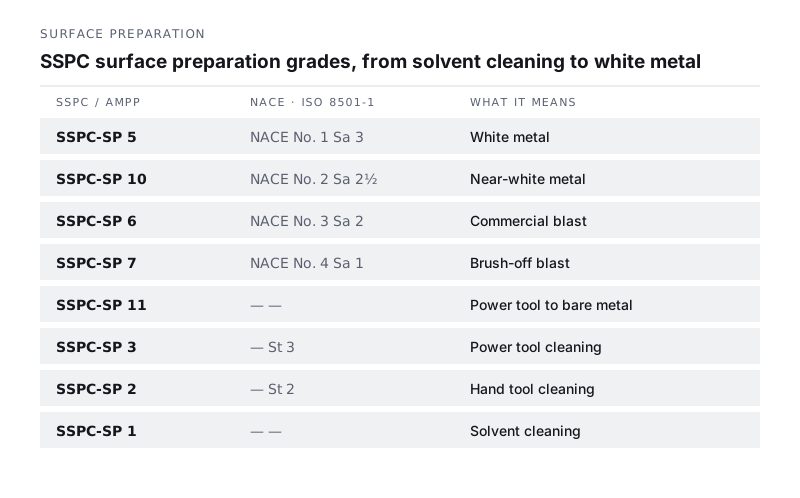
The Standard Equivalency Table
When reading a Technical Data Sheet (TDS) or an engineering specification, you might see SSPC, NACE, or ISO designations used interchangeably. Use this table as your definitive cross-reference guide.
| SSPC Standard | NACE Equivalent | ISO 8501 Equivalent | Description | Typical Use Case |
|---|---|---|---|---|
| SSPC-SP 1 | None | None | Solvent Cleaning: Removal of oil, grease, dirt, soil, salts, and contaminants. | Mandatory first step before any mechanical preparation. |
| SSPC-SP 2 | None | St 2 | Hand Tool Cleaning: Removal of loose rust, loose mill scale, and loose paint by hand chipping, scraping, sanding. | Minor touch-ups, benign environments (C1-C2). |
| SSPC-SP 3 | None | St 3 | Power Tool Cleaning: Same as SP2 but using power tools. More thorough, but does not achieve a profile. | Maintenance repainting where blasting is impossible. |
| SSPC-SP 5 | NACE No. 1 | Sa 3 | White Metal Blast Cleaning: 100% removal of all visible rust, mill scale, paint, and foreign matter. | Immersion service (tanks), extreme chemical environments (CX). |
| SSPC-SP 6 | NACE No. 3 | Sa 2 | Commercial Blast Cleaning: Removal of all visible contaminants. Random staining limited to 33% of each unit area. | Standard exterior industrial environments (C3-C4). |
| SSPC-SP 7 | NACE No. 4 | Sa 1 | Brush-Off Blast Cleaning: Removal of loose rust, mill scale, and paint. Tightly adherent material may remain. | Sweeping galvanizing, overcoating sound existing paint. |
| SSPC-SP 10 | NACE No. 2 | Sa 2 ½ | Near-White Metal Blast Cleaning: Removal of all visible contaminants. Staining limited to 5% of each unit area. | Severe environments (C5), typical for most high-performance epoxies. |
| SSPC-SP 11 | None | None | Power Tool Cleaning to Bare Metal: Removal of all visible rust/paint using power tools, while also producing a surface profile (minimum 1 mil). | Spot repairs in C4/C5 areas where blasting is prohibited. |
The Difference Between SSPC-SP6 and SSPC-SP10
A common source of confusion in industrial maintenance is choosing between Commercial Blast (SP6) and Near-White Metal Blast (SP10).
The difference lies entirely in the allowable staining:
- SSPC-SP10 (Near-White): Allows light shadows, streaks, or minor discolorations on a maximum of 5% of each 9 square inch area.
- SSPC-SP6 (Commercial): Allows staining on up to 33% of each 9 square inch area.
The near-white grade has its own page, covering how that 5% is judged in the field and when SP10 is the right call rather than SP6 or SP5.
Specifying SP10 for a structural beam in a dry warehouse (C2) is a waste of abrasive and labor. Specifying SP6 for a chemical tank exterior (C5) risks premature failure. Always match the preparation degree to the ISO 12944 Corrosivity Category of the asset.
Don’t Forget the Profile
Standards like SP5, SP6, and SP10 dictate the cleanliness of the steel. They do not dictate the depth of the surface profile (anchor pattern).
You must specify the required profile (e.g., 2.0 to 3.0 mils) separately in your specification, as dictated by the coating manufacturer’s TDS.
Frequently asked questions
What is the difference between SSPC and NACE standards?
What is the ISO 8501 equivalent to SSPC-SP10?
Does SSPC-SP1 Solvent Cleaning remove mill scale?
Sources and references
- StandardSSPC-SP COM-2017 — Surface Preparation Commentary for Metal SubstratesAMPP · accessed August 8, 2026
- StandardISO 8501-1:2007 — Preparation of steel substrates — Visual assessment of surface cleanliness — Part 1ISO · accessed August 8, 2026
Request a technical review
Describe your equipment and the problem. You get an engineering answer, not a sales pitch.